Office Furniture Clearout Inventory Checklist
Count desks, chairs, storage, modular parts, and access requirements before asking for a clearout estimate.
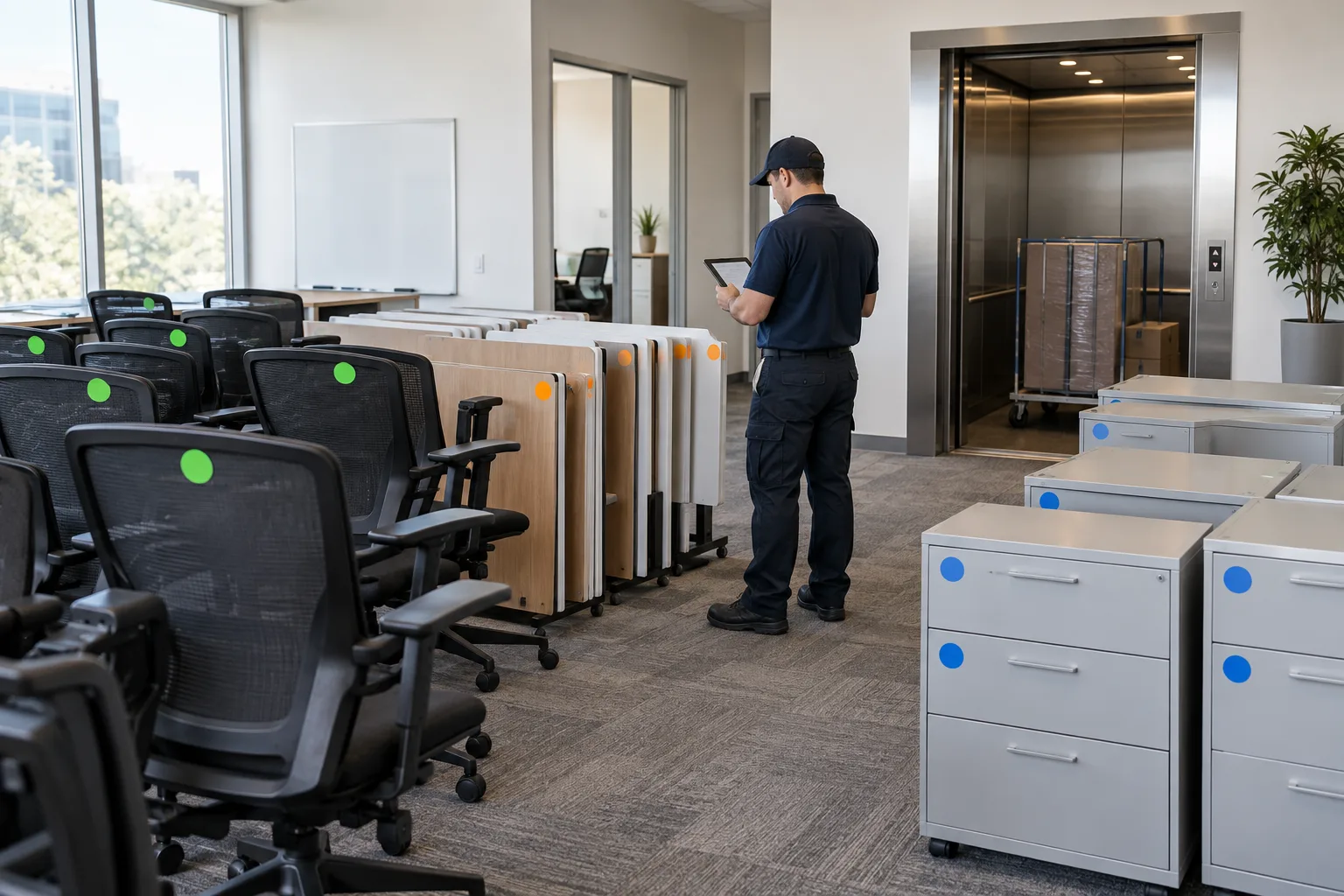
A good pickup starts with the item’s construction, the narrowest part of the route, and the access rules at the property. You should not need to carry bulky furniture outside before a planned in-home removal.
Count by item type
List task chairs, guest chairs, desks, returns, conference tables, filing cabinets, bookcases, and storage units separately. For modular workstations, count complete stations and panels rather than calling everything “desks.”
Photograph representative items and any unusually large pieces. A clear inventory reduces scope changes when the crew arrives.
Separate furniture from business records
Remove computers, phones, cables, personal items, keys, and paper records. Do not leave customer, employee, financial, or medical information inside drawers or cabinets.
Electronic equipment, batteries, and confidential records may require a different handling path. Keep them outside the furniture-removal pile unless their destination has been agreed in advance.
Document building access
Confirm loading-dock rules, freight-elevator dimensions, certificates required by the property manager, parking limits, and approved work hours. Identify floor level, carry distance, and whether occupied offices must remain open.
Use colored removable dots or a written room list to separate “remove,” “relocate,” and “stay” items. Avoid adhesive that can damage finishes.
Estimate request packet
Inventory with quantities; representative photos; floor and suite; elevator or stairs; dock and parking rules; preferred schedule; on-site contact; items excluded from removal; security or access instructions.
Need help with the pickup itself?
Review the office furniture removal scope, then share the inventory and access details when you email.
See Office Furniture Removal