A Measurement Guide for Dining Table Removal
Measure the top, base, exit, and turning room before a heavy dining table is moved.
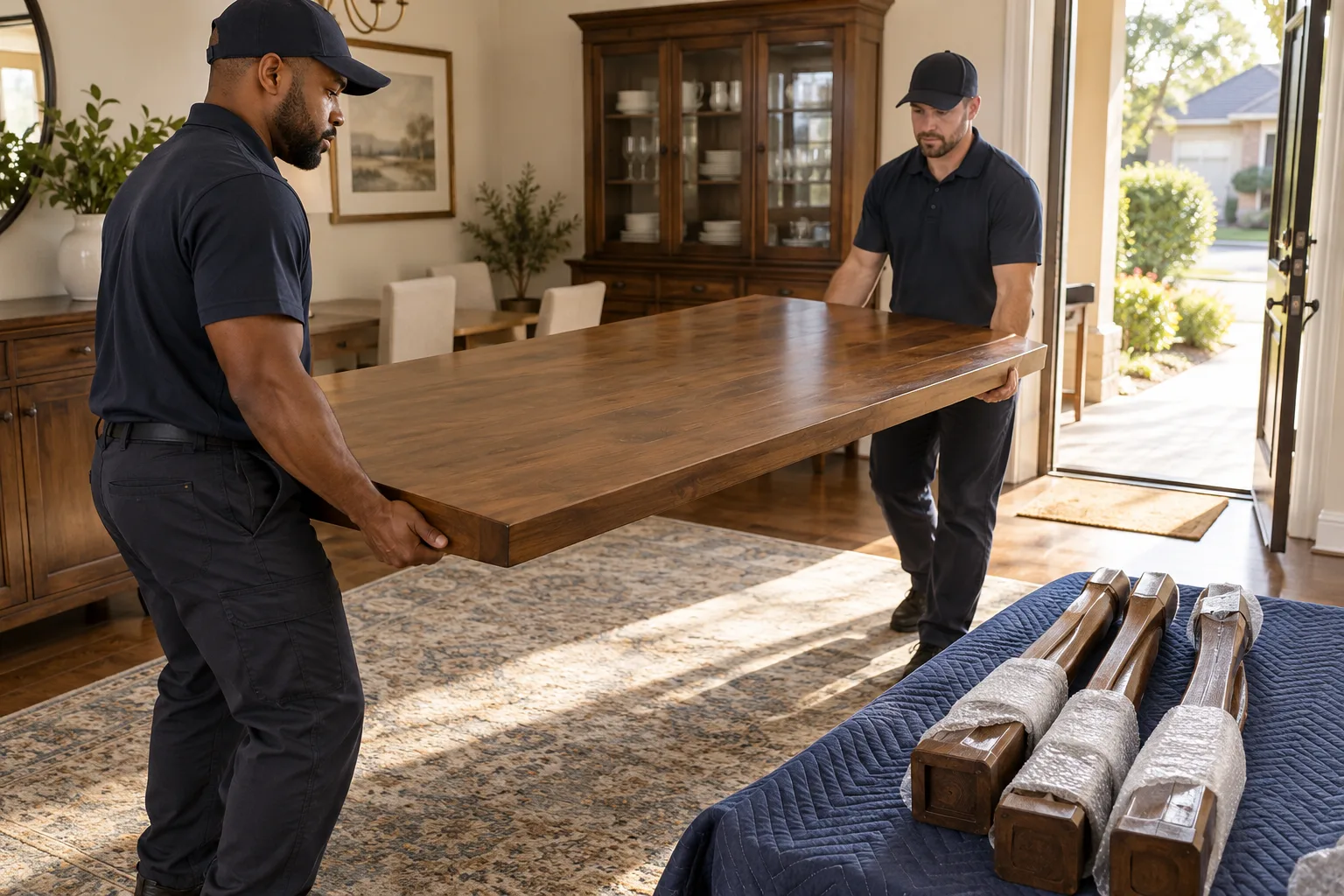
A good pickup starts with the item’s construction, the narrowest part of the route, and the access rules at the property. You should not need to carry bulky furniture outside before a planned in-home removal.
Record four useful measurements
Measure the tabletop length and width, its thickness, the overall height, and the narrowest usable exit. Then note the space available to turn the table near doors or stairs. These measurements help determine whether the top, legs, or pedestal must be separated.
For tables with leaves, measure and list the leaves separately. For glass or stone, describe whether the top lifts free and whether chips or cracks are present.
Check how the base connects
Look underneath without crawling under an unstable table. Note visible bolts, mounting plates, trestles, or a central pedestal. A photo can help a removal provider bring the right tools.
Do not assume a heavy top is attached just because it does not slide. Some tops rely on their own weight. Avoid lifting or tipping it to investigate unless you can do so safely.
Prepare the room
Remove dishes, decor, extension leaves, and nearby chairs. Clear wall art and rugs from the exit path. If a china cabinet or bench is also leaving, list it as a separate item.
Tell the provider about glass, stone, reclaimed timber, or built-in electrical features. Material changes the weight and handling plan.
Quick planning table
Wood top: check removable legs or base. Glass top: disclose thickness, condition, and whether it separates. Stone top: request an assessment before moving. Pedestal table: photograph the mounting plate. Trestle table: note stretcher connections and length.
Need help with the pickup itself?
Review the dining table removal scope, then share the inventory and access details when you email.
See Dining Table Removal